
Download our SSCE Study Guide Bundle
Chapter 1 Summary of Path of Lucas
Chapter 1 of Path of Lucas opens with Lucy, a devoted mother and grandmother, leaving her office in Kingston, Ontario, to spend the weekend with her father, Lucas, in her hometown of Alexandria. After grabbing a coffee and her father’s favourite donuts, she heads out on the highway, but about an hour into the drive, thick fog severely limits her visibility. Suddenly, another vehicle swerves into her lane; in her attempt to avoid a head-on collision, Lucy loses control of her car and crashes violently into an electrical pole. The other driver pauses for a split second before fleeing the scene. A passer-by calls 911, and emergency responders extract an unconscious Lucy from the mangled wreckage. They rush her to the General Hospital afterwards.
At the hospital, it is determined that Lucy is in a coma, suffering from severe brain swelling due to a traumatic head injury. A nurse manages to contact Lucy’s husband, Mark, a defence lawyer who is working late on a case. Devastated, Mark calls Lucy’s eldest son, Danny, who promises to gather his three brothers—Ryan, Dwayne, and Johnny—and head to the hospital. Mark then has to deliver the heartbreaking news to his father-in-law, Lucas, who goes into a state of shock and terror before rushing out to the hospital.
At the ICU, Mark is briefed by Dr. Wright, a neurologist, who confirms that the next twenty-four hours are critical. Mark is overwhelmed with grief when he sees his wife hooked up to life-support machines. Lucas arrives shortly after, and the two men try to comfort each other. When Mark steps out to handle police paperwork, Lucas is left alone at his daughter’s bedside. Desperate to reach her, Lucas begs her to wake up and promises to stay with her and talk to her all night if he has to. To comfort her, he decides to recount the story of his youth and his courtship with her beautiful mother. He consciously decides to narrate his life story in the third person—as if it happened to someone else—knowing Lucy will understand it is his story.
Analysis of Chapter 1
Chapter 1 of Path of Lucas serves as the crucial framing narrative for the entire novel. The author introduces the present-day tragedy of Lucy’s coma to provide an emotional anchor and a high-stakes reason for exploring the past. Lucas’s deliberate choice to recount his history in the third person effectively explains the narrative voice of the subsequent chapters; it bridges the gap between the present crisis and his historical biography.
The chapter sharply contrasts the safety of mundane daily routines with the sudden, chaotic nature of tragedy. Lucy transitions from casually chatting with her secretary and buying donuts to fighting for her life in an ICU within a matter of hours. The injustice of the hit-and-run accident emphasises how quickly and unfairly life can be shattered.
This chapter immediately establishes a theme of deep familial devotion. Lucy is characterised by her dedication to her father; she makes regular trips just to spend time with him. When the crisis hits, the family’s rapid mobilisation highlights a tight-knit family unit. Lucas’s refusal to leave his daughter’s side and his desperate attempt to heal her through storytelling highlights his enduring strength and parental love.
Chapter 2 Summary of Path of Lucas
Chapter 2 of Path of Lucas begins in the late summer of 1956. It introduces seventeen-year-old Lucas proudly washing his beloved 1949 red Studebaker. His father, John, a highly respected and industrious farmer with over four hundred acres of land, asks Lucas to run an errand to town for supplies. The narrative takes a moment to introduce the extended Clarkson family; it details Lucas’s older brother, James, and older sister, Mary. Lucas is established as a “miracle child” born thirteen years after Mary, following the tragic loss of another sibling who died at birth. Lucas is described as a handsome, strong, yet gentle young man who shares a deep, loving bond with his parents, particularly his soft-spoken mother, Elizabeth.
While driving to town with the radio blasting Hank Williams, Lucas spots two girls walking along the country road. He recognises them as the daughters of Mr. Bourgeois, a farmer who recently relocated from Quebec City. Lucas stops to offer them a ride. The older sister, France, accepts and pushes her incredibly shy younger sister, Isabelle, into the front seat next to Lucas. Isabelle hardly speaks a word, but Lucas is instantly mesmerised by her beauty and quiet demeanour. He feels a profound spark that he has never experienced before. When he drops them off at their busy log farmhouse, Isabelle simply gives him a timid smile and says “Merci,” leaving Lucas completely captivated.
Lucas proceeds to the general store in town to pick up his father’s supplies, but he is entirely distracted and dazed by his encounter with Isabelle. The store clerk, Mr. Brown, notices his absent-mindedness and teases him with the suggestion that Lucas looks as though he has just seen an “angel from heaven.” Lucas happily agrees. He admits he just met the most beautiful girl he has ever seen.
Lucas returns home for dinner, his exceptional mood immediately noticed by his parents. He eagerly shares the story of meeting the Bourgeois sisters. He specifically highlights how pretty Isabelle is. In response, Elizabeth warmly recounts the story of her own courtship with John. She claims that John had the exact same lovestruck reaction when they first met. The chapter closes with Lucas reflecting on his parents’ strong, happy marriage. He hopes that he too will eventually find that same kind of genuine love.
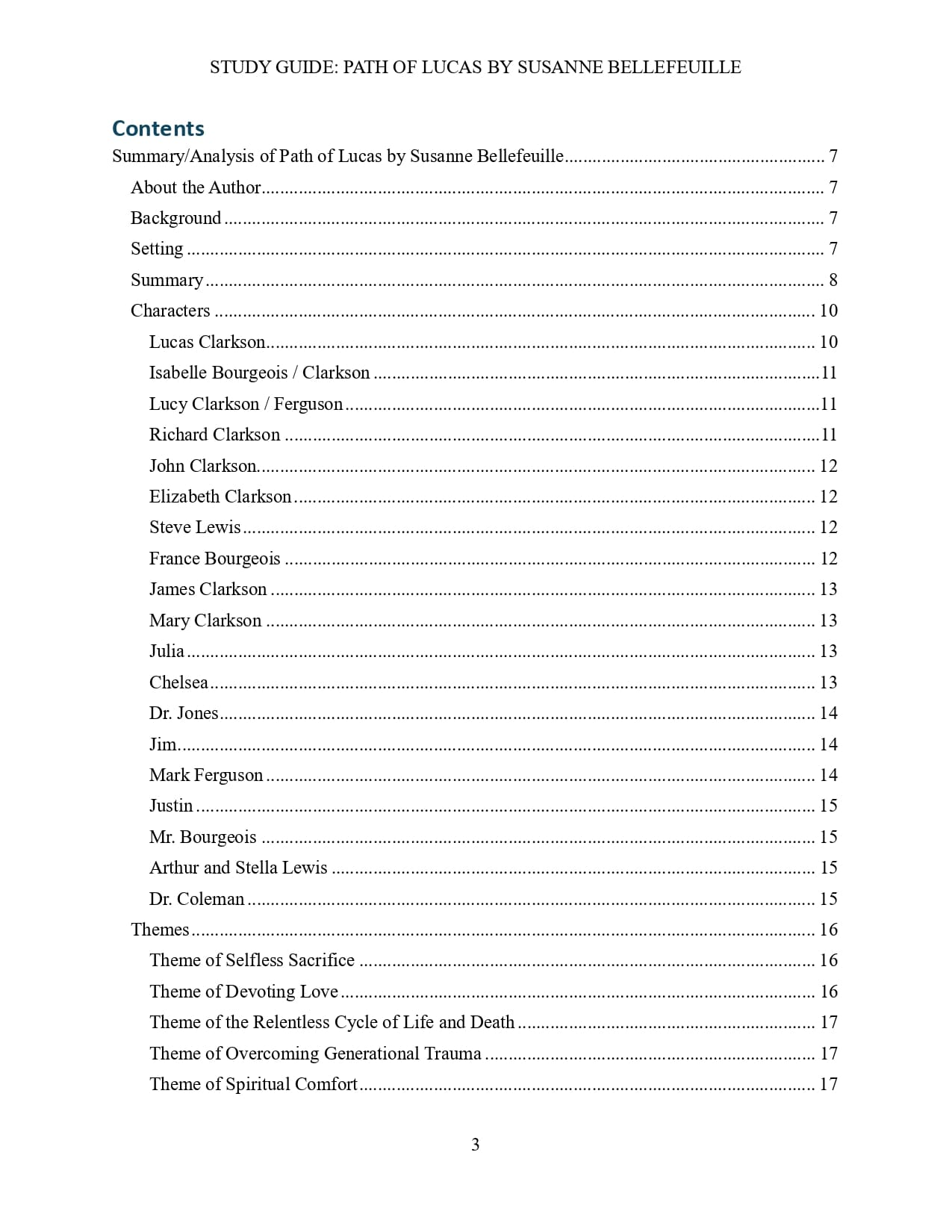
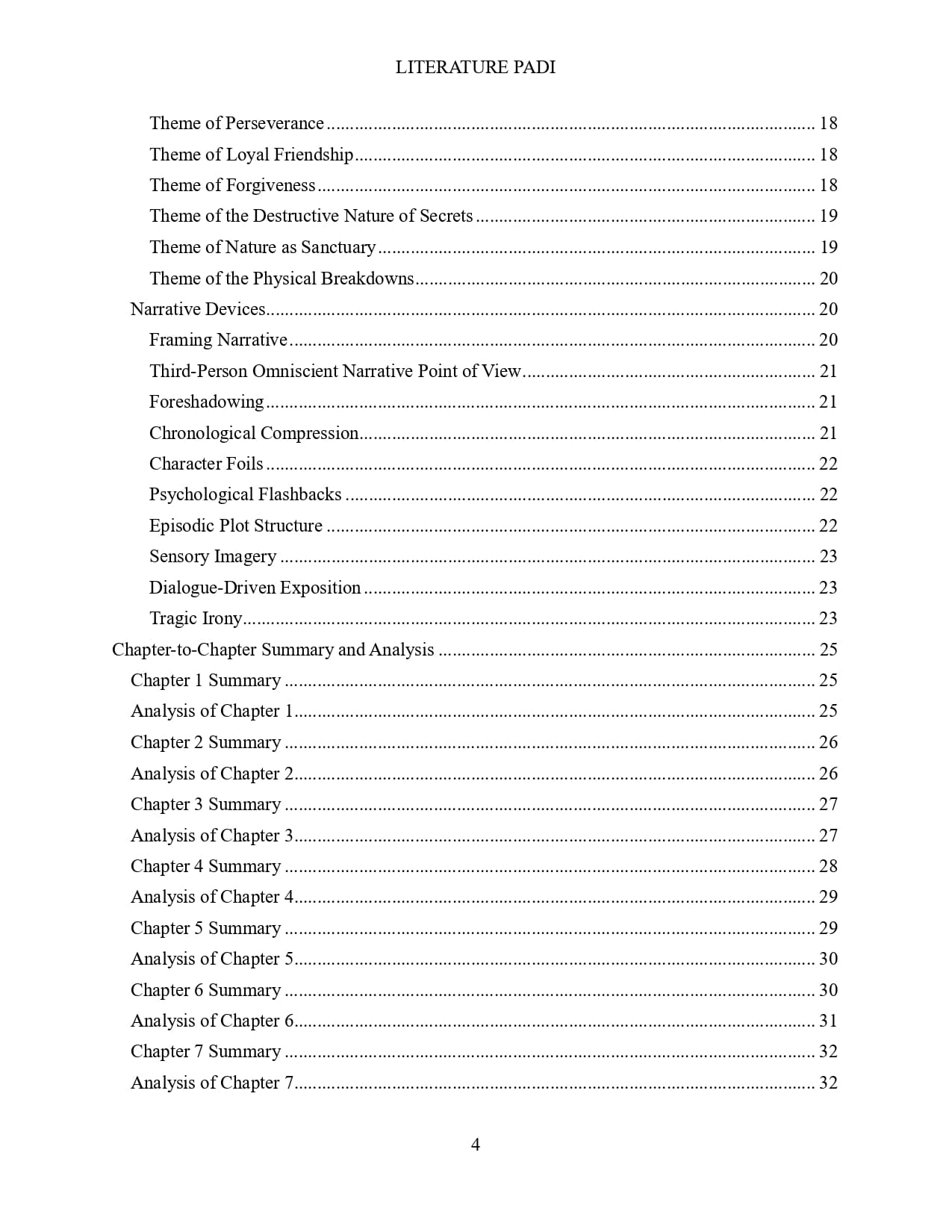
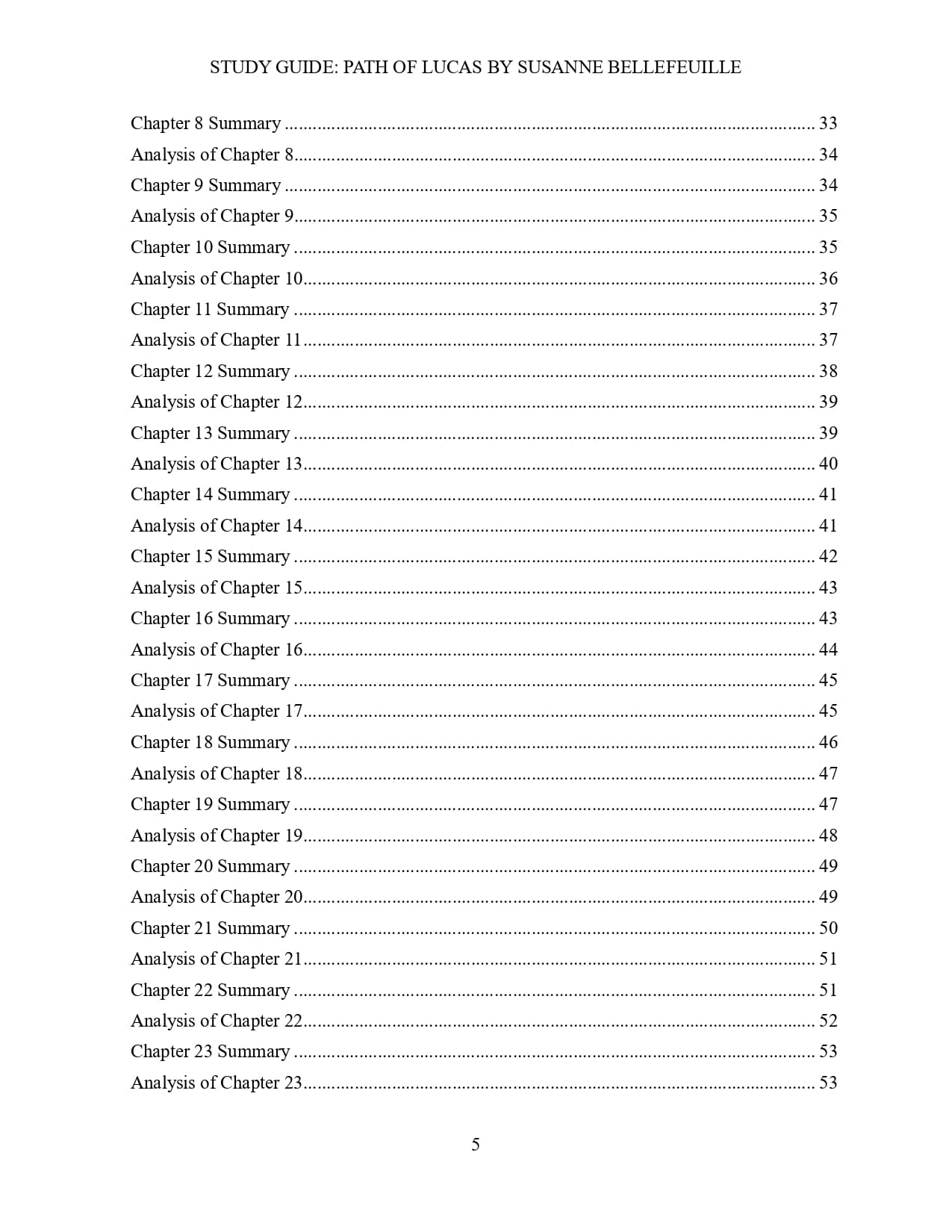
Get the Full Analysis in PDF
Enjoying this breakdown? What you’re reading is just part of the full experience. The premium PDF edition brings everything together in one seamless, distraction-free document that has the background, setting, plot summary, chapter-to-chapter summary and analysis, narrative devices, characters, and themes. If you’re studying seriously, this is the version you’ll want.

Analysis of Chapter 2
This chapter of Path of Lucas leans heavily into the romantic trope of love at first sight. Lucas’s instant, powerful reaction to Isabelle—causing him to fumble his words, feel a knot in his stomach, and walk around in a daze—sets the stage for their sweeping romance. Isabelle is repeatedly framed through Lucas’s infatuated perspective as an almost ethereal being.
The author spends significant time outlining the Clarkson family tree and their secure, loving dynamic. John and Elizabeth’s relationship is a successful blueprint for Lucas; they are affectionate, supportive, and openly communicate with each other. Their stable, relatively wealthy farming life also subtly contrasts with the initial glimpse of the Bourgeois family, who walk long distances and live in an old log house with many young children running around. This contrast hints at the socioeconomic differences between the two families.
Lucas is depicted as a wholesome, innocent young man standing on the threshold of adulthood. His immense pride in his first car, his enjoyment of driving with his elbow out the window, and his polite, nervous interactions with the girls perfectly capture the essence of a 1950s teenager coming of age. His transition from a boy focused solely on his car to a young man yearning for a lifelong partner marks the beginning of his true-life journey.
Chapter 3 Summary of Path of Lucas
Three weeks pass at a snail’s pace, and Lucas still has not seen Isabelle despite frequently driving by her house. His older brother, James, notices Lucas’s distraction and suggests he simply knock on her door to ask her out on a date. However, Lucas’s respectful and polite nature prevents him from showing up unannounced. James mentions seeing her family walking early on Saturday mornings, but Lucas’s strict schedule of morning farm chores with his father keeps him from going to town to look for her.
To keep his mind off Isabelle, Lucas focuses on his farm work until his mother delivers an exciting news: his best friend, Steve, has returned early from Air Force training. Lucas is overjoyed and immediately drives his prized Studebaker to Steve’s parents’ house to greet him. Steve is thoroughly impressed by Lucas’s car, and the two young men decide to take it for a spin to the Alexandria Hotel for a beer to catch up.
At the hotel bar, the friends reminisce. Steve talks passionately about the freedom of flying, while Lucas shares his lingering dream of becoming a mechanic and tells Steve all about the beautiful French girl he met. Their peaceful reunion is abruptly interrupted by Kris, the mayor’s spoiled, wealthy son and the town bully. Intoxicated and arrogant, Kris insults Steve, calling him a “loser” and a “poor boy,” before suddenly punching Steve in the face. Refusing to be pushed around any longer, Steve retaliates fiercely. He knocks Kris to the floor and unleashes years of pent-up anger. Lucas uses his considerable strength to pull Steve off Kris before he seriously hurts him, and the crowd cheers Steve for finally taking down their childhood tormentor.
After the altercation, Steve confides in Lucas that he will likely be stationed far away, driven by a deep need to serve his country and follow the heroic legacy of his late Uncle Tom, who died in WWII. The very next morning, Steve receives unexpected orders to deploy immediately to Cold Lake, Alberta. He stops by the Clarkson farm for a final, emotional farewell, sharing chocolate cake with Lucas and his mother. Before driving away, Steve leaves Lucas a piece of high school football memorabilia and reminds his best friend to never give up on his own dreams and to go find “the pretty French girl.”
Analysis of Chapter 3
The confrontation at the hotel bar is a microcosm of the social and class divides within the small town. Kris Cameron, protected by his father’s mayoral status and wealth, represents unearned privilege and bullying. In contrast, Steve grew up in poverty, which severely affected his self-esteem. By standing up to Kris and physically defeating him, Steve reclaims his self-worth and symbolically defeats his childhood oppressor, much to the satisfaction of the working-class patrons.
This chapter of Path of Lucas firmly establishes the profound, brotherly bond between Lucas and Steve. They balance each other perfectly: Lucas provides emotional stability and physical intervention when Steve loses control during the fight, while Steve acts as a catalyst, constantly encouraging Lucas to step out of his comfort zone, pursue his mechanical talents, and actively seek out Isabelle.
A central tension introduced here is the conflict between familial obligation and personal aspiration. Steve embraces his dangerous dream of flying, despite the immense worry it causes his parents, as he tries to live up to his Uncle Tom’s military legacy. Lucas, however, dreams of becoming a mechanic and finding Isabelle, but he is currently tethered to the farm by his deep sense of duty to his father.
The author effectively uses Lucas’s prolonged inability to find Isabelle to build romantic tension. Lucas’s absolute refusal to inappropriately show up at her house characterises him as a perfect, respectful gentleman, but it also leaves him agonising over her absence. This forced separation heightens his infatuation and sets the stakes for their eventual reunion.
Related:
- Chapter 4 to 6 Summary and Analysis of Path of Lucas by Susanne Bellefeuille
- Chapter 7 to 9 Summary and Analysis of Path of Lucas by Susanne Bellefeuille
- Chapter 10 to 12 Summary and Analysis of Path of Lucas by Susanne Bellefeuille
- Chapter 13 to 15 Summary and Analysis of Path of Lucas by Susanne Bellefeuille
- Chapter 16 to 21 Summary and Analysis of Path of Lucas by Susanne Bellefeuille
- Chapter 22 to 24 Summary and Analysis of Path of Lucas by Susanne Bellefeuille
- Chapter 25 to 29 Summary and Analysis of Path of Lucas by Susanne Bellefeuille
- Chapter 30 to 32 Summary and Analysis of Path of Lucas by Susanne Bellefeuille
- Chapter 33 to 35 Summary and Analysis of Path of Lucas by Susanne Bellefeuille
Receive Literary Updates through our Social Media Channels:
- WhatsApp: Literature PADI or Literature-in-English with LP
- Telegram: Literature PADI
- YouTube: @literaturepadi
- Facebook: Literature PADI


