

Download our SSCE Study Guide Bundle
The City Planners

Cruising these residential Sunday
streets in dry August sunlight:
what offends us is
the sanities:
the houses in pedantic rows, the planted
sanitary trees, assert
levelness of surface like a rebuke
to the dent in our car door.
No shouting here, or
shatter of glass; nothing more abrupt
than the rational whine of a power mower
cutting a straight swath in the discouraged grass.

But though the driveways neatly
sidestep hysteria
by being even, the roofs all display
the same slant of avoidance to the hot sky,
certain things:
the smell of spilled oil a faint
sickness lingering in the garages,
a splash of paint on brick surprising as a bruise,
a plastic hose poised in a vicious
coil; even the too-fixed stare of the wide windows

give momentary access to
the landscape behind or under
the future cracks in the plaster

when the houses, capsized, will slide
obliquely into the clay seas, gradual as glaciers
that right now nobody notices.

That is where the City Planners
with the insane faces of political conspirators
are scattered over unsurveyed
territories, concealed from each other,
each in his own private blizzard;

guessing directions, they sketch
transitory lines rigid as wooden borders
on a wall in the white vanishing air

tracing the panic of suburb
order in a bland madness of snows.

— Margaret Atwood
Reference
Atwood, M. (1964). The city planners. In The circle game. Toronto, Canada: Contact Press.
About the Poet
Margaret Atwood is one of the most influential contemporary writers in the English language and is widely regarded as Canada’s most celebrated living author. She is a prolific poet, novelist, essayist, and literary critic whose works explore power, gender relations, identity, environmental crisis, and the fragile boundaries between civilisation and chaos. While she is often associated with science fiction, Atwood prefers to describe much of her work as speculative fiction, rooted in real social and historical possibilities.
She was born on November 18, 1939, in Ottawa, Ontario. Much of Atwood’s early childhood was spent in the forests of northern Quebec and Ontario, where her father, a forest entomologist, conducted research. As a result, she experienced an unconventional upbringing, living close to nature and away from formal schooling until her early teens. This early exposure to wilderness and isolation strongly shaped the settings, imagery, and ecological concerns that recur throughout her writing.
Atwood studied at Victoria College, University of Toronto, where she earned a Bachelor of Arts, and later completed a master’s degree at Radcliffe College, associated with Harvard University. She began writing poetry at a young age, and poetry was her first major literary form before she gained international recognition as a novelist.
Her literary career spans more than six decades and includes over fifty published books across poetry, fiction, short stories, children’s literature, and non-fiction. She is best known for works such as The Handmaid’s Tale, Oryx and Crake, Alias Grace, and The Testaments. In poetry, collections like The Circle Game and Power Politics established her reputation for sharp social insight and psychological depth.
Margaret Atwood has received numerous international honours. These include winning the Booker Prize twice for The Blind Assassin (2000) and The Testaments (2019). She is also known for her engagement with feminism, environmentalism, and free speech.
She shared a long-term partnership with fellow Canadian writer Graeme Gibson until his death in 2019, and they have one daughter. Atwood continues to live in Toronto and remains active in literary, cultural, and public debates well into her eighties.
Setting of “The City Planners”
The poem is set in a modern suburban residential area, observed during a quiet Sunday in August under dry sunlight. The physical setting consists of neatly planned streets lined with identical houses, trimmed lawns, sanitary trees, orderly driveways, and wide windows. These features are typical of post-war North American suburbs. Everything in this environment appears controlled, calm, and meticulously arranged, with no noise or visible disorder beyond the hum of a power mower.
However, the setting extends beyond this surface calm. Beneath the visible suburb is a psychological and symbolic setting marked by suppressed tension and latent decay. Subtle details such as the smell of spilled oil, a splash of paint likened to a bruise, and a coiled hose described as “vicious” suggest that unease and potential violence exist beneath the planned order. The poem also gestures towards a future setting, imagined as a time when the houses will collapse and slide into the earth.
In the final movement of the poem, the setting shifts metaphorically to vast, snow-filled, unsurveyed territories where the city planners themselves are imagined as isolated figures working blindly. This abstract, almost surreal landscape underscores the emptiness and madness behind the imposed suburban order.
Altogether, the setting moves from a realistic suburban environment to a symbolic space that exposes the fragility, artificiality, and hidden anxiety underlying modern urban planning.
Get the Full Analysis in PDF
Enjoying this breakdown? What you’re reading is just part of the full experience. The premium PDF edition brings everything together in one seamless, distraction-free document that has the poem, themes, structure, and full commentary. If you’re studying seriously, this is the version you’ll want.
Summary of “The City Planners”
The speaker drives through a suburban neighbourhood on a quiet Sunday and observes streets arranged in rigid order, where the houses stand in “pedantic rows” and project an unsettling sense of “sanity.” The suburb appears calm and civilised, but the speaker feels disturbed by the excessive neatness, which seems to function as a silent rebuke to anything imperfect or human. There is no open violence or chaos. Instead, there is only the controlled hum of life, such as the “rational whine of a power mower,” which suggest a mechanical, emotionally muted environment.
The speaker looks more closely. It is only then that the signs of unease emerge beneath the surface order. Subtle details like the “smell of spilled oil,” a splash of paint “surprising as a bruise,” and a hose coiled “in a vicious” way become apparent. These otherwise hidden details hint at hidden sickness, repression, and latent aggression within the suburb. The wide windows briefly allow access to what lies “behind or under” the orderly façade, foreshadowing “future cracks in the plaster” and exposing the fragility of the planned environment.
The poem then projects into the future. It imagines a time when the houses will be “capsized” and slide into the earth “gradual as glaciers,” unnoticed by those who believe in their permanence.
In the final section of the poem, the focus shifts to the city planners themselves. They are portrayed as paranoid figures with “insane faces,” scattered across unknown territories and drawing “transitory lines” in a “white vanishing air.”
“The City Planners” concludes by presenting suburban order as a form of collective panic, a “bland madness” that attempts to impose control on a world that is ultimately unstable and uncontrollable.
Themes in “The City Planners”
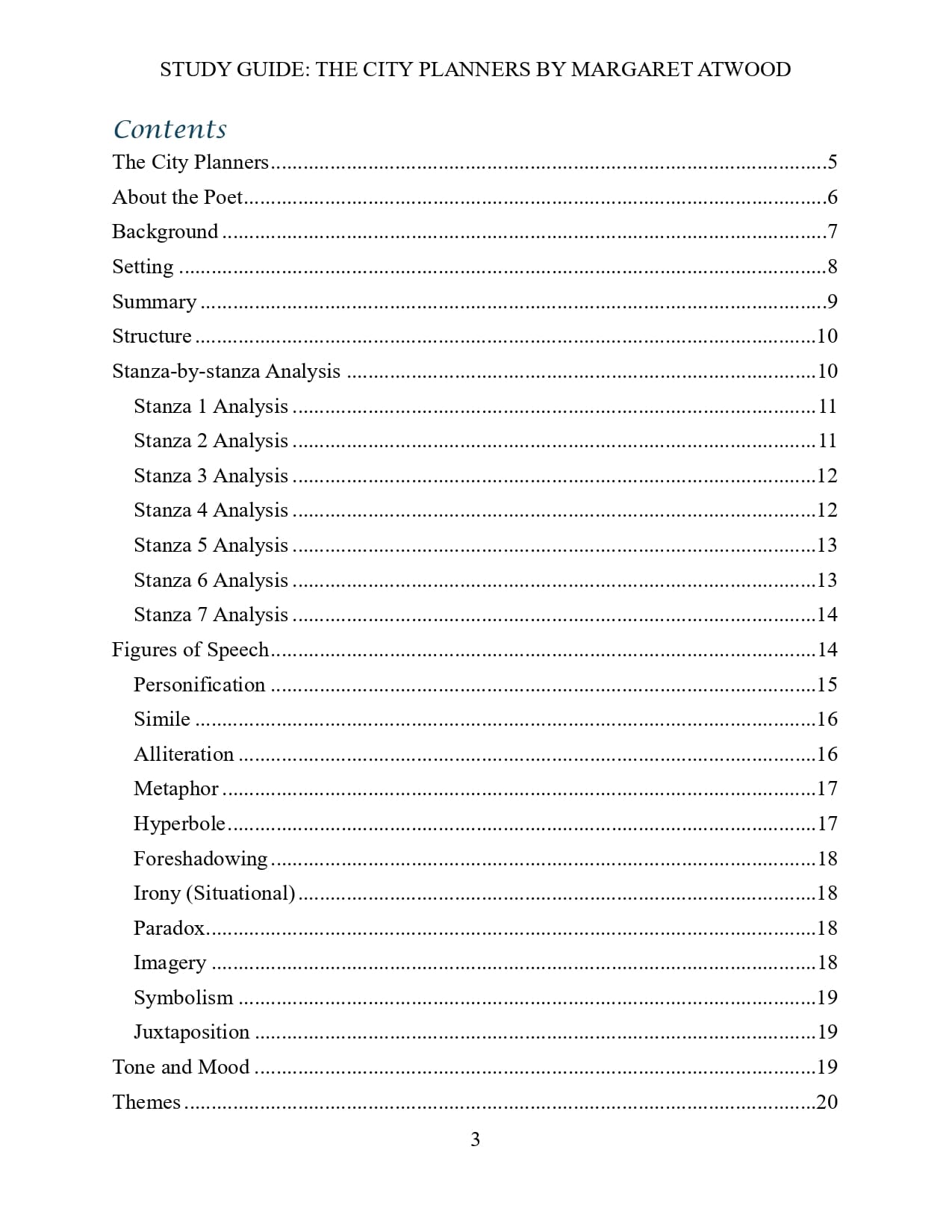
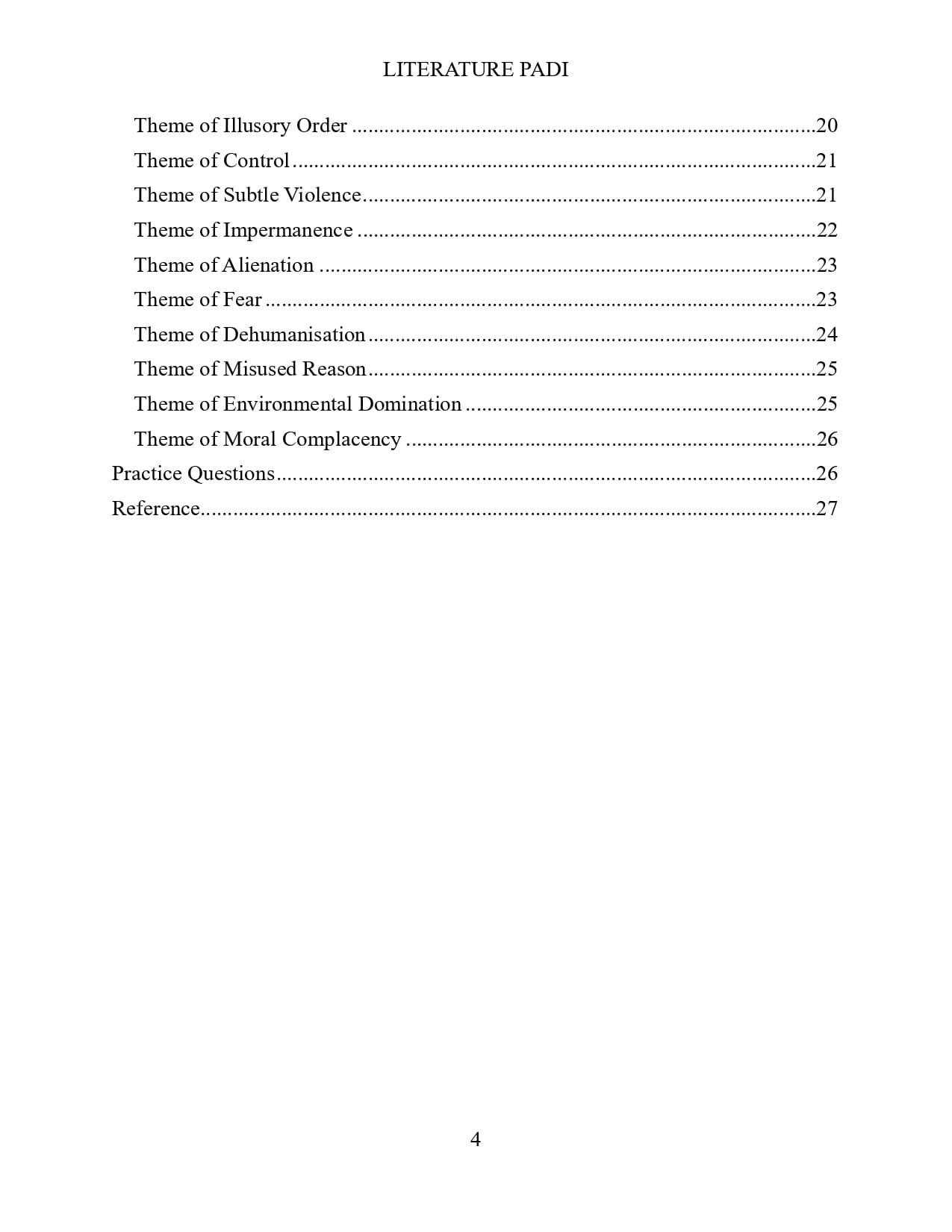
“The City Planners” engages with the themes of illusory order, control, subtle violence, impermanence, alienation, fear, dehumanisation, misused reason, environmental domination, and moral complacency. The poem depicts the psychological, social, and ecological consequences of excessive control and imposed uniformity in modern life. In this section, we are going to examine these highlighted themes and how they collectively convey the poet’s critique of bureaucratic order and artificial stability.
Theme of Illusory Order
The poem engages with the theme of illusory order through its presentation of suburban order as an artificial construct. The speaker is unsettled by what appears to be excessive neatness. She notes that what “offends” her is the suburb’s supposed “sanities” (lines 3–4). This reaction inverts the normal expectation of order as reassuring. She feels uneasy about order.
This illusion is most powerfully conveyed through the rigid uniformity of the built environment. The houses arranged in “pedantic rows” and the “sanitary trees” project a world obsessed with correctness, hygiene, and regulation (lines 5–6). The landscape is forced into compliance. This asserts a perfect “levelness of surface” that feels morally judgmental, as though rebuking any flaw or irregularity (line 7).
The suburb’s silence makes a stronger statement about this false sense of sanity. Human spontaneity is absent. There is no “shouting” or “shatter of glass.” The only form of sound comes from a mower maintaining order (lines 9–11). Vitality is suppressed in favour of visual tidiness (line 12), as can be seen in the subdued and lifeless grass. In succinct words, calmness here is enforced quiet.
Beneath this surface order, however, are subtle disruptions that expose its fragility. Signs of lingering oil smells, bruise-like paint marks, and menacing domestic objects indicate the subtle presence of disorder in the surrounding. The wide windows, with their unnaturally fixed stare, momentarily reveal what lies “behind or under” the polished façade. These glimpses undermine the illusion of permanence.
The most decisive collapse of this supposed sanity appears in the prophetic vision of the suburb’s fate. The houses are imagined “capsized” and sliding slowly into the earth, unnoticed by those who believe in their stability (lines 26–28). This image confirms that the planners’ order is temporary and illusory.
Theme of Control
Modern suburban planning is an aggressive attempt to impose control on both human life and the natural world. This control is most visible in the planners’ obsession with boundaries and measurements, as they are imagined “guessing directions” while sketching “transitory lines rigid as wooden borders” in an empty expanse (lines 34–36). It is ironic that these lines, though drawn with authority, are temporary and insubstantial.
The built environment itself reflects this compulsion to regulate space. Houses arranged in “pedantic rows” and landscapes forced into “levelness of surface” project geometric precision (lines 5–7). The vegetation is disciplined into submission, with “sanitary trees” and mechanically trimmed lawns. Nature is made to conform to human design (lines 6, 12).
This control extends into emotional and psychological life. Driveways that “sidestep hysteria / by being even” suggest that physical symmetry is used to suppress emotional excess (lines 13–14). Control here is redefined as an attempt to regulate feeling as well as environment.
But, nature is presented as the counterforce to human control. The suburb’s apparent permanence dissolves in the vision of houses “capsized” and sliding into “clay seas,” a reminder that the earth reclaims what has been imposed upon it (lines 26–27). This slow submergence underscores that natural processes operate beyond the reach of planners’ measurements and grids.
Get the Full Analysis in PDF
Enjoying this breakdown? What you’re reading is just part of the full experience. The premium PDF edition brings everything together in one seamless, distraction-free document that has the poem, themes, structure, and full commentary. If you’re studying seriously, this is the version you’ll want.
Theme of Subtle Violence
Atwood depicts violence as muted, repressed, and woven quietly into the fabric of suburban order. One of the most striking expressions of this hidden violence appears in the domestic details scattered across the suburb. She describes a splash of paint on brick as resembling a bruise. This comparison implies that harm exists beneath the suburb’s clean façade.
Similarly, the presence of a plastic hose “poised in a vicious / coil” converts a harmless household object into something threatening (lines 21–22). The word “vicious” injects latent aggression into the scene. It suggests restrained hostility lurking within controlled domestic spaces. This sense of tension is furthered by the lingering “smell of spilled oil,” characterised as a faint sickness that hangs in garages (lines 18–19).
Violence is also embedded in the suburb’s emotional atmosphere. The silence feels imposed and forced. Even maintenance activities carry undertones of coercion, with the mower cutting a rigid path through grass that appears subdued and dispirited (lines 11–12). Order is achieved through trimming, cutting, and disciplining. Likewise, architectural features participate in this quiet hostility. Windows possess a “too-fixed stare.” The suburb watches, controls, and contains.
This suppressed violence expands into the poem’s prophetic vision of destruction. The imagined capsizing of houses and their slow submergence into the earth evokes a delayed but inevitable collapse, as though the violence buried within the suburb will eventually surface in structural ruin (lines 26–27). On the whole, aggression is displaced into objects, architecture, silence, and atmosphere.
Theme of Alienation
The theme of alienation operates at both the social and psychological levels in “Then City Planners.” The planners themselves embody this isolation most starkly. They are depicted as scattered across “unsurveyed territories,” separated and “concealed from each other” (lines 31–32). Each exists in “his own private blizzard” (line 33). These solitary figures are enclosed within their own mental climates. Their abstract work isolates them from lived reality. While they draw borders and directions, they operate in “white vanishing air,” detached from the human consequences of their designs (line 36). Their intellectual mapping disconnects them from tangible life.
This alienation extends into the suburb they design. Human presence is curiously absent from the landscape. What dominates are houses, surfaces, and controlled spaces. There is no evidence of lived interactions. The environment feels observed rather than inhabited. The “too-fixed stare of the wide windows” creates an atmosphere of surveillance without intimacy, as though residents watch without relating (line 22). Simply put, visibility replaces connection.
Architectural uniformity deepens this estrangement. Houses arranged in “pedantic rows” erase individuality. Dwellings, and by extension their occupants, are reduced to repetitive units (line 5). The speaker is merely “cruising” the streets with a sense of an observational distance. She does not engage the streets nor show any sense of belonging.
Theme of Fear
Fear is the psychological engine behind the suburb’s obsessive order. It shapes both the environment and the mentality of those who design it. For the most part, the planners’ actions are driven by anxiety about disorder, unpredictability, and loss of control. This is most explicitly captured in the closing image of them “tracing the panic of suburb / order,” where planning itself is revealed as a response to fear (lines 37–38). In other words, order is a defensive shield against imagined chaos.
This anxiety manifests in the planners’ psychological state. They are depicted with “insane faces of political conspirators.” This depiction is one characterised by paranoia, secrecy, and distrust (line 30). Their scattered existence across “unsurveyed territories” gives the idea that they operate within uncertainty (line 31). Each planner is enclosed in “his own private blizzard” (line 33).
Fear also underlies the suburb’s physical design. Architectural symmetry and environmental neatness are mechanisms to suppress emotional excess. Driveways that “sidestep hysteria” imply that built space is engineered to avoid emotional eruption (lines 13–14). Even the uniform roofs display a collective “avoidance to the hot sky” (line 16).
Even the prophetic vision of structural collapse connects to fear, particularly collective denial. The houses’ slow submergence into the earth goes “right now nobody notices,” implying a society too anxious or too conditioned to confront looming consequences (line 28).
Receive Literary Updates through our Social Media Channels:
- WhatsApp: Literature PADI or Literature-in-English with LP
- Telegram: Literature PADI
- YouTube: @literaturepadi
- Facebook: Literature PADI


