
Download our SSCE Study Guide Bundle
Some of the narrative devices used in Path of Lucas include the framing narrative technique, third-person omniscient narrative point of view, foreshadowing, chronological compression, character foils, psychological flashbacks, episodic plot structure, sensory imagery, dialogue-driven exposition, and tragic irony.
Framing Narrative
The author utilises a framing narrative that establishes a dual timeline to anchor the historical events of the story to a high-stakes, present-day crisis. The novel opens in the present with adult Lucy falling into a deep coma following a horrific car accident. Sitting by her hospital bed, her elderly father Lucas bargains with her, promising to recount the story of his life and courtship with her mother to keep her anchored to the living world.
This framing device creates an overarching sense of urgency and emotional weight that permeates the extensive flashbacks beginning in 1956. In the end, the narrative returns to this present-day hospital room for the novel’s climax, where Lucy miraculously awakens just as Lucas suffers a fatal heart attack, seamlessly tying the two timelines together.
Third-Person Omniscient Narrative Point of View
Path of Lucas employs a third-person omniscient perspective, which is cleverly justified within the novel as Lucas’s conscious choice of storytelling. Before he begins recounting his past to his comatose daughter, Lucas deliberately decides to tell the story of his life and courtship “in third person as though it happened to someone else,” knowing Lucy will understand it is his story.
This decision allows the author to authentically utilise an omniscient narrator that easily drifts into the internal thoughts and feelings of various characters throughout the decades. For instance, the reader is granted direct access to Isabelle’s hidden terrors regarding her abusive childhood and her secret pregnancy, which Lucas himself did not know at the time. It also allows the narrative to explore the perspectives of secondary characters, such as Mark’s panic during Lucy’s accident or Steve’s internal monologue when fighting the town bully.
Foreshadowing
Foreshadowing is consistently used throughout the novel to build tension and hint at the inescapable tragedies that will afflict the Clarkson family. When Lucas makes the agonising decision to abandon his mechanic apprenticeship in Uxbridge and move back to the family farm, he experiences a strong, negative “gut feeling that life will change for [him].” This dark premonition accurately foreshadows the relentless wave of tragedy that subsequently hits the family, which include the deaths of Steve and Darcy, as well as Isabelle’s severe mental breakdown.
In addition, throughout the present-day framing narrative, Lucas repeatedly experiences sharp chest pains and shortness of breath while sitting by Lucy’s bed. He actively hides these escalating physical symptoms through sheer willpower so he can finish his story. This heavily foreshadows the massive, fatal heart attack that kills him in the hallway the moment his mission is complete.
Chronological Compression
The novel spans nearly four decades. This requires the author to use accelerated pacing and frequent time jumps to compress the family’s expansive history into a cohesive narrative. Phrases like “A few years pass,” “Months flew by,” and “Spring finally arrives” are consistently employed to quickly transition between major life events, such as the births of children or the onset of illnesses.
This structural device allows the author to maintain the story’s forward momentum without getting bogged down in the mundane, day-to-day details of rural farming life. As the narrative skips ahead directly to pivotal moments like Richard’s sudden cancer diagnosis or France’s rapid decline, it deliberately heightens the emotional impact on the reader. It also underscores the unpredictable nature of mortality. In this sense, this chronological compression acutely echoes the novel’s overarching theme that life is fleeting; it is demonstrative of how years can pass by in what feels like the blink of an eye.
Character Foils
Susanne Bellefeuille frequently employs character foils to indicate the defining traits of the protagonists and emphasise their core values. The most prominent example is the stark contrast between Lucas and his lifelong best friend, Steve. While Steve represents youthful freedom, ambition, and the relentless pursuit of individual dreams by joining the Air Force, Lucas represents duty, sacrifice, and domestic responsibility by continually putting his own ambitions aside to save the family farm.
Another clear foil exists between Isabelle’s abusive parents, who ruled their household through fear and violence, and Lucas and Isabelle’s own parenting style, which is defined by unconditional love, respect, and supportive discipline.
The novel juxtaposes these opposing life choices and parenting methods to clearly define the moral centre of the Clarkson family and foreground the nobility of Lucas’s selfless sacrifices.
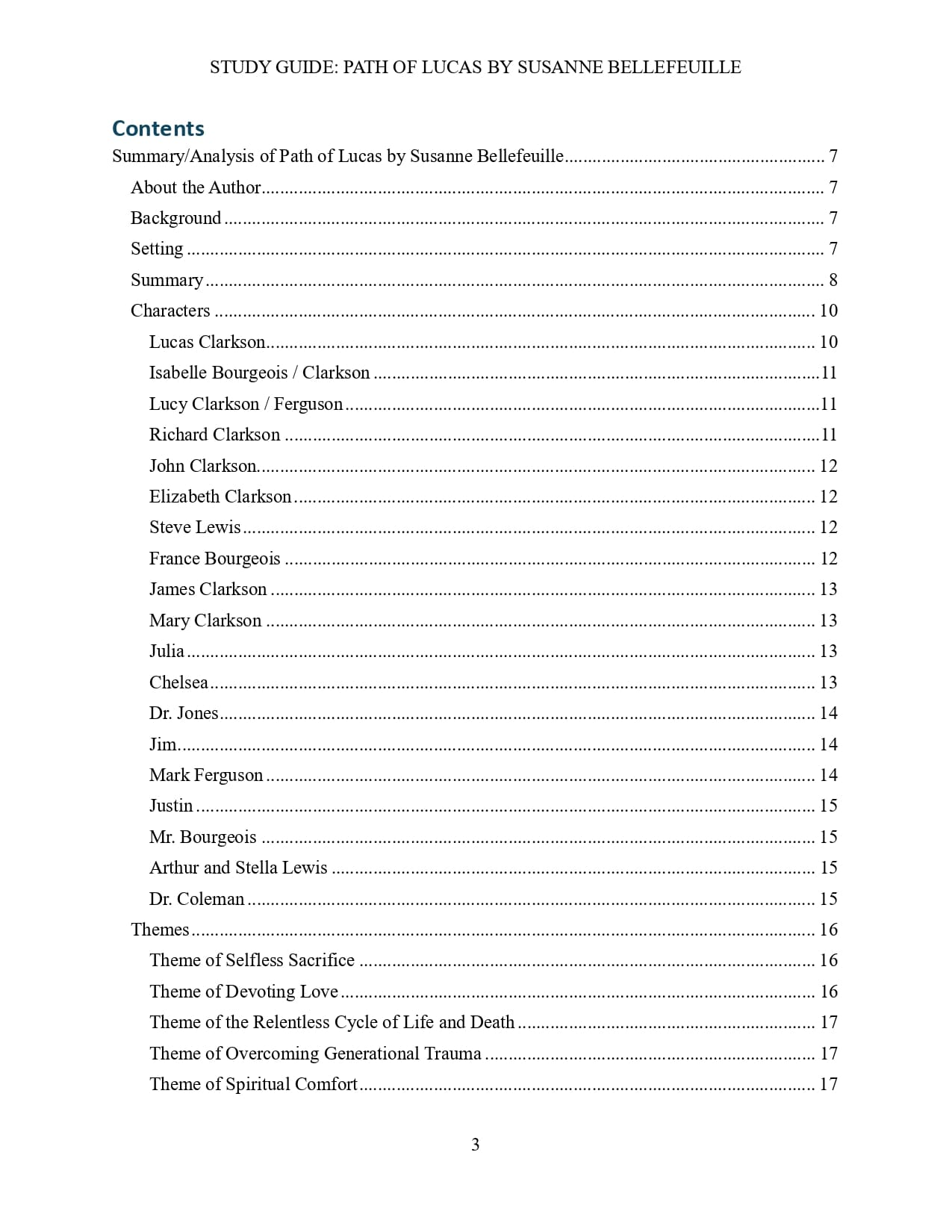
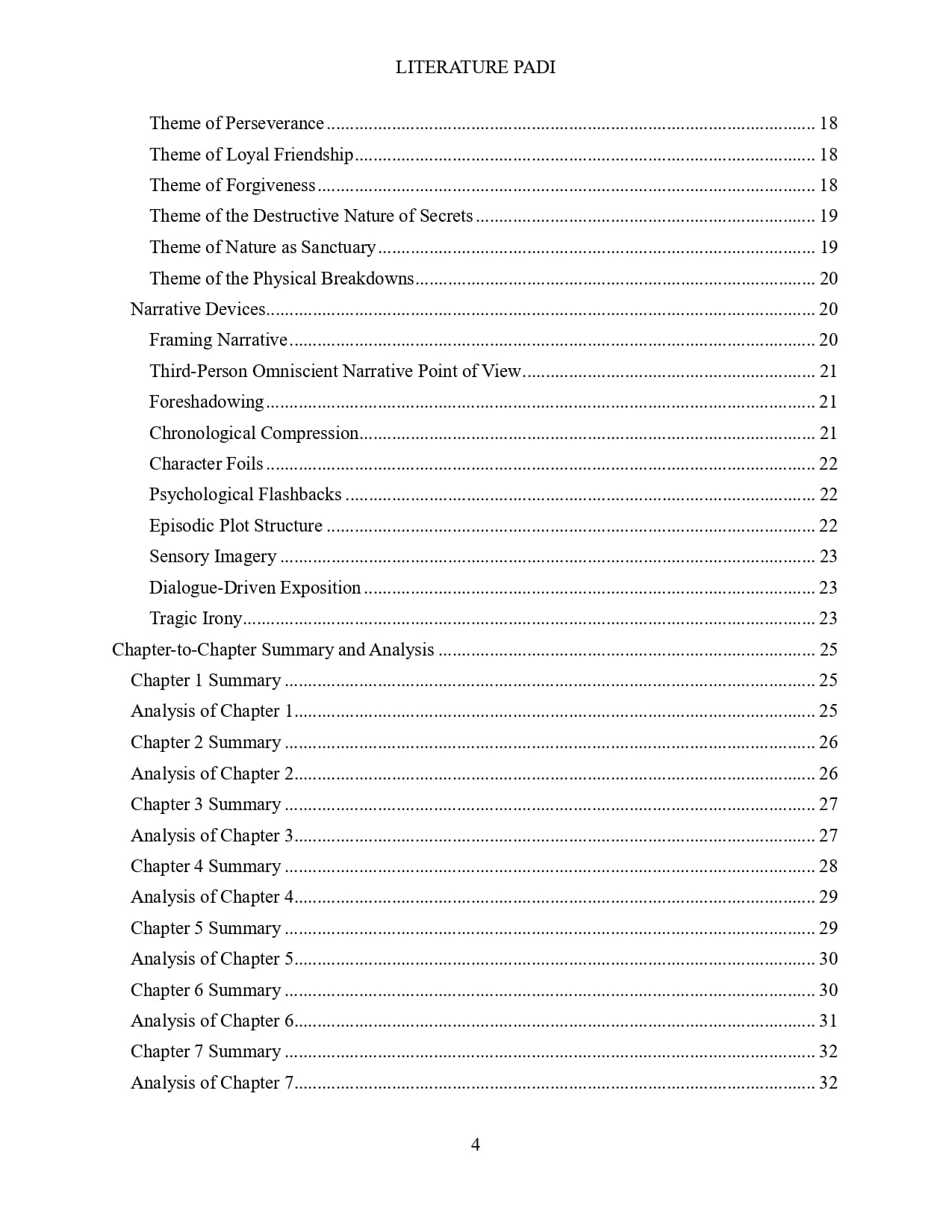
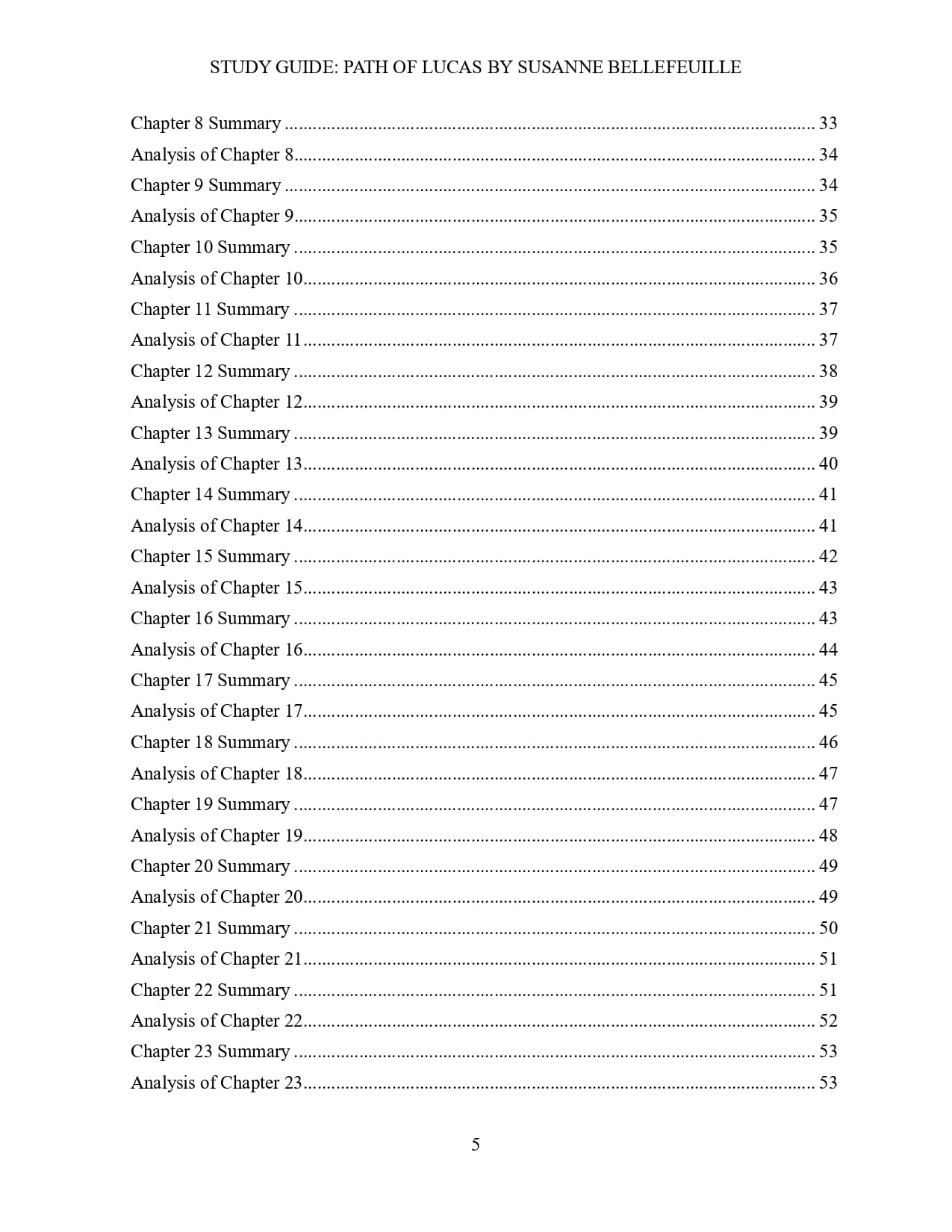
Get the Full Analysis in PDF
Enjoying this breakdown? What you’re reading is just part of the full experience. The premium PDF edition brings everything together in one seamless, distraction-free document that has the background, setting, plot summary, chapter-to-chapter summary and analysis, narrative devices, characters, and themes. If you’re studying seriously, this is the version you’ll want.

Psychological Flashbacks
Evidently, the entire novel is framed as one massive flashback recounted by Lucas. However, beyond this apparent use of flashback, the author also uses isolated internal flashbacks as a specific plot device to drive Isabelle’s mental health recovery.
This manifests during Isabelle’s severe psychotic depression when she loses all memory of her adult life. To anchor his lovely wife back to good health, Lucas has to find creative, unorthodox ways to trigger her suppressed recollections. One such is the picture cube which is filled with photos of her children and husband. Lucas gives her the picture cube in hope that it will act as a physical catalyst to trigger her lost memory. And it does spark brief, sudden visions of Isabelle’s past while she wraps Christmas gifts.
These internal flashbacks include, most notably, her sudden visualisation of Lucas offering her an engagement ring and well of course, her vision of herself in a wedding dress. In a significant way these internal flashbacks gradually shatter the illusion of her mental illness.
Noteworthily, the reader experiences these sudden bursts of memory alongside Isabelle.
Episodic Plot Structure
Bellefeuille employs an episodic narrative structure to efficiently chronicle nearly four decades of the Clarkson family’s history. Instead of providing a continuous, day-by-day account of Lucas and Isabelle’s lives, the novel leaps forward in time to focus exclusively on pivotal milestones, conversations, and crises. For example, the text frequently uses abrupt transitional phrases like “Months flew by,” “A few years go by,” or “It is 1979” to immediately plunge the reader into the next significant era of the family’s journey.
This structural choice allows the author to compress a lifetime of events into a concisely paced novel.
Sensory Imagery
The author relies heavily on sensory imagery to establish the emotional mood of a scene. Vivid descriptions of food and domestic smells, such as Elizabeth’s homemade chocolate chip cookies, Isabelle’s famous barbecue chicken, and the comforting aroma of fresh coffee, are constantly used to evoke feelings of warmth, safety, and family harmony.
Conversely, moments of intense grief and death are often paired with harsh or sombre environmental details, such as John’s funeral taking place on a “cold, snowy day” or Isabelle’s abusive father passing away on a “cold winter night.”
Furthermore, the author utilises the changing of seasons and the natural world to mirror the cycle of life. This is best exemplified when Isabelle admires the autumn leaves on the oak tree, taking comfort in the fact that everything dies and is born again.
To a very large extent, the narrative links the characters’ experiences to their sensory environment to make the family’s emotional highs and lows feel more immersive and grounded in their rural reality.
Dialogue-Driven Exposition
Instead of relying solely on the omniscient narrator to summarise off-page events or character backstories, the author frequently uses dialogue-driven exposition (or expositional dialogue) to reveal crucial plot points. For instance, the dire reality of John’s financial ruin is not simply stated by the narrator; it is painfully confessed through dialogue when John desperately begs Lucas to abandon his career and return to the farm.
Similarly, the horrific details of Isabelle’s abusive childhood are uncovered through a tense, emotional conversation between her and Lucas in the forest. This allows the reader to experience the raw emotional impact of her secret.
Besides, major off-screen tragedies, such as Steve’s fatal plane crash, are also delivered directly to the reader and the characters simultaneously via telephone dialogue in what is obviously a preservation of the immediate shock value of the news.
This device ensures that the exposition feels active and deeply personal, as the reader discovers vital medical, financial, and emotional information exactly as the protagonist does.
Tragic Irony
Path of Lucas consistently utilises a form of tragic irony with its direct juxtaposition of moments of absolute peak happiness with sudden, devastating crises. The author deliberately builds up scenes of intense family harmony such as the perfect, joyful Christmas gathering celebrating baby Paige’s arrival, only to violently shatter them mere hours later, as seen when Richard suddenly begins choking from a cancerous throat tumour.
Another profound example occurs when Isabelle actively takes control of her health, loses weight, and enters a joyful era of travelling in a Winnebago with Lucas, only to abruptly and permanently die from a massive cardiac arrest.
This narrative device creates a persistent sense of vulnerability for the characters. It also conditions the reader to fear that every joyful milestone in the characters’ lives will exact a heavy price. In all, this relentless oscillation between triumph and tragedy is a structural reminder of life’s fragility and unpredictability.
Related:
- Plot Summary and Setting of Path of Lucas by Susanne Bellefeuille
- Characters in Path of Lucas by Susanne Bellefeuille
- Themes in Path of Lucas by Susanne Bellefeuille
Receive Literary Updates through our Social Media Channels:
- WhatsApp: Literature PADI or Literature-in-English with LP
- Telegram: Literature PADI
- YouTube: @literaturepadi
- Facebook: Literature PADI


